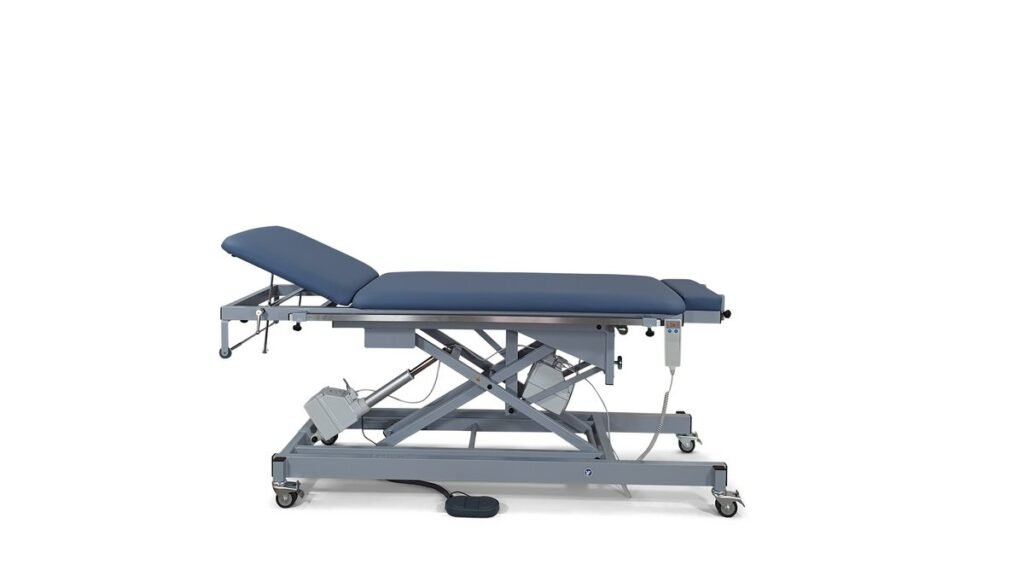
Dual Motor Tilt Table
The Dual Motor Tilt Table is an innovative rehabilitation tool that combines advanced technology and ergonomic design to support patients with neurological, musculoskeletal, and mobility challenges.
This device features two independent motors, enabling precise adjustments in both tilt angle and table height. Such flexibility makes it an essential tool for personalized therapy, especially for patients recovering from stroke, spinal cord injuries, or other neuromuscular disorders.
Conditions Effectively Treated with Dual Motor Tilt Table
Independent Dual Motor Technology
One motor controls precise tilt inclination from 0° flat to 90° full vertical standing, while the second motor adjusts table height, ensuring safe, effortless patient transfers and optimal biomechanical angles.
Cardiovascular Adaptation & Weight-Bearing
Gradual verticalization acclimates the baroreceptors and circulatory system to gravity, preventing syncope, boosting vital lung expansion, and loading the long bones to prevent osteopenia.
Comprehensive Benefits of Dual Motor Tilt Table
Discover how controlled robotic standing therapy accelerates neurological recovery, stabilizes cardiovascular response, and rebuilds muscular independence.
Precise Customization
Minimizes the need for invasive procedures like surgery. Independent dual motors allow exact micro-adjustments in inclination and table elevation tailored to each patient's tolerance.
Enhanced Circulation
Helps prevent blood pooling and boosts cardiovascular health in immobile patients. Gentle progressive vertical positioning stimulates autonomic vascular tone and reduces syncope risk.
Facilitates Gait Training
Prepares patients for walking by strengthening muscles and improving posture. Re-engages lower limb proprioceptors and anti-gravity extensor muscles prior to dynamic ambulation.
Neurological Recovery
Crucial for rehabilitation in stroke, spinal cord injuries, and traumatic brain injuries. Upright standing sends continuous sensory afferent signals to rewire damaged neural pathways.
Postural Stability
Aids in correcting posture and balance, reducing the risk of falls. Strengthens spinal trunk extensors and core musculature to establish dynamic upright head and torso control.
Early Mobilization
Safely transitions patients to an upright position, encouraging early recovery. Prevents deep vein thrombosis (DVT), muscle contractures, and pressure ulcers during post-acute care.
Step-by-Step Verticalization Protocol
Under Dr. Ashish Singh's guidance, each tilt table session follows a rigorous clinical safety and adaptation protocol to optimize recovery.
Pre-Session Assessment
Evaluation of resting blood pressure, heart rate, joint range of motion, and baseline muscle spasticity to determine the target tilt schedule.
Ergonomic Positioning
Patient is securely placed on the padded table using multi-point thoracic, pelvic, and knee support straps with adjustable footplates.
Graduated Motorized Tilt
Smooth motor controls elevate the patient from 15° to 30°, 60°, and up to 90° incrementally while vitals and patient comfort are actively tracked.
Therapeutic Stimulation
While verticalized, patients engage in upper extremity tasks, neck control exercises, or synchronized FES therapy for maximum neuro-recovery.
FAQs Related to Dual Motor Tilt Table
Find clear, clinically validated answers about our Dual Motor Tilt Table sessions, patient comfort, pediatric safety, and rehabilitation milestones.
What is the purpose of the Dual Motor Tilt Table ?
The table helps in rehabilitation by transitioning patients to an upright position, improving circulation, and enhancing weight-bearing capacity. It helps re-educate the neurological system to gravity after prolonged periods of bed rest or neurological injuries.
Can it be used for pediatric patients ?
Yes, its adaptable design makes it suitable for both pediatric and adult patients. With fully customizable strap placements, adjustable footplates, and precise height controls, children with conditions such as cerebral palsy or developmental delay can safely benefit from vertical standing therapy.
Is it painful to use the tilt table ?
No, it is designed to ensure comfort and safety during therapy. Therapists monitor sessions continuously to prevent discomfort. The elevation is performed slowly and smoothly, allowing the patient's cardiovascular system and muscles to adjust naturally without distress.
How does the tilt table improve recovery ?
By promoting blood circulation, improving muscle strength, and supporting neuromuscular re-education. Standing actively prevents bone demineralization, activates gastrointestinal and respiratory systems, and retrains brain proprioceptors necessary for learning to walk again.
Fill The Form Below
Schedule an in-person assessment with Dr. Ashish Singh (P.T.) to evaluate your or your loved one's verticalization readiness and custom rehabilitation protocol.
Book Tilt Table Session
Fill out the form below. Our clinical coordinator will confirm your session time immediately via WhatsApp or call.